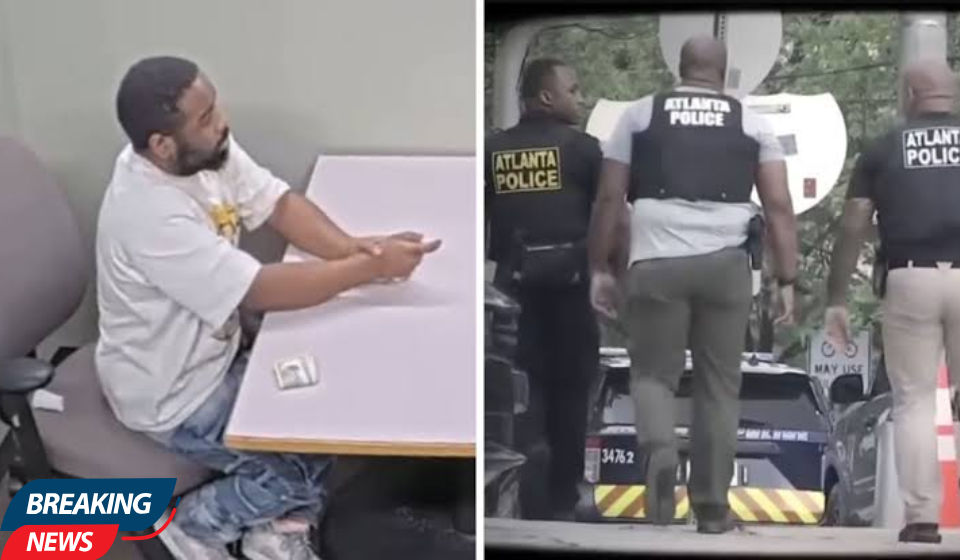
A shooting that was initially described as a drive-by ambush targeting an undercover Fulton County sheriff’s deputy has taken a dramatically different turn after newly obtained surveillance footage and investigative records raised questions about how the confrontation unfolded.
An investigation by Atlanta News First found that the admitted shooter, Ivan Watson, was released without charges after authorities concluded he may not have realized he was firing at a law enforcement officer. Video evidence suggested the undercover deputy was wearing plain clothes, driving an unmarked vehicle without visible emergency lights or sirens, and identified himself as police only after gunfire had already erupted.
The revelations have cast doubt on the public narrative presented immediately after the April 2025 shooting and prompted renewed discussion about transparency and the risks involved in undercover police operations.
Initial Reports Described the Shooting as a Drive-By Attack
The incident occurred on April 24, 2025, after Fulton County Sheriff’s Deputy Evens Lafond responded to a report involving a suspicious person in downtown Atlanta.
At the time, authorities described the shooting as a drive-by attack in which a suspect opened fire on a deputy before fleeing the scene.
Following the incident, Fulton County Sheriff Pat Labat publicly vowed that the person responsible would be arrested.
“We’re going to get this young man, and we’re going to hold him accountable,” Labat said after the shooting. “Either we’re going to find him or he’s going to be found.”
The statements created the impression that the deputy had been intentionally ambushed while performing his duties.
Surveillance Footage Presented a Different Sequence of Events
More than a year later, Atlanta News First investigative reporter Brendan Keefe obtained surveillance footage and investigative records that painted a far more complex picture.
According to the investigation:
- Deputy Lafond was working undercover.
- He was dressed in jeans and a T-shirt rather than a police uniform.
- He was driving an unmarked Honda equipped with concealed emergency lights.
- The surveillance footage did not appear to show emergency lights or sirens activated during the pursuit.
The video reportedly showed Lafond following an unhoused man along Forsyth Street near Trinity Avenue before driving over a curb.
He then exited the vehicle with his firearm drawn and chased the individual on foot.
Moments later, shots rang out.
Lafond was struck in the lower leg during the exchange.
Watson Claimed He Thought His Brother Was Under Attack
The following day, Georgia State Patrol officers stopped a vehicle believed to have been involved in the shooting.
Ivan Watson and his girlfriend were taken into custody and questioned for approximately four and a half hours.
During the interview, Watson admitted firing the shots but said he believed his brother was being attacked by an armed civilian.
According to Watson, he saw a man wearing ordinary clothing chasing his brother with a gun.
He told investigators that he reacted because he feared for his brother’s life.
Watson also claimed Deputy Lafond fired first.
“He turned the gun toward me and shot, and I returned fire,” Watson reportedly told investigators.
He further stated that he did not realize Lafond was a law enforcement officer until he saw news coverage following the incident.
Watson maintained that if the deputy had identified himself before the shooting, he would not have fired.
Investigators Found Deputy Identified Himself After the Shooting Began
According to the surveillance video reviewed by investigators, Deputy Lafond did not identify himself as a police officer until after he had already been shot.
The footage reportedly showed:
- Lafond is exiting an unmarked vehicle.
- Chasing Watson’s brother while holding a firearm.
- Gunfire erupting.
- Lafond was struck in the leg.
- Lafond is retreating toward cover.
Only after being wounded could he reportedly be heard shouting:
“I’m the police! Police!”
Atlanta police investigators concluded that Watson may not have known Lafond was an officer before the shooting began.
That finding became central to the decision not to pursue criminal charges.
Physical Evidence Raised Questions About Deputy’s Statement
The investigation also uncovered inconsistencies regarding whether Deputy Lafond fired his weapon.
In a written statement, Lafond reportedly stated:
“I never got a chance to fire a shot.”
However, investigators recovered:
- One 9mm shell casing near Lafond’s undercover vehicle.
- Approximately twelve .40-caliber shell casings near the area where Watson said he fired.
According to the Atlanta Police Department’s investigative report, evidence indicated Lafond had discharged his firearm before backup officers arrived.
Investigators also reportedly discussed the recovered casing while processing the scene.
Although traumatic events can affect memory, the physical evidence differed from Lafond’s written account.
Police Equipment Became Visible After the Gunfire
The surveillance footage reportedly showed additional details that investigators considered important.
According to police reports:
- A bystander assisted Lafond in putting on police equipment after the shooting.
- Someone activated the undercover vehicle’s emergency siren after the exchange of gunfire.
- Body-camera footage from responding officers later showed emergency lights operating.
However, surveillance footage reportedly did not show those emergency signals during the initial pursuit.
Investigators concluded these details were significant because they affected whether Watson could reasonably have recognized Lafond as a police officer before opening fire.
Watson Released Without Criminal Charges
Despite admitting he fired the shots that injured Deputy Lafond, Watson and his girlfriend were released following questioning.
After reviewing surveillance footage, witness interviews, and physical evidence, Atlanta police concluded they could not establish that Watson knowingly targeted a law enforcement officer.
The investigation ultimately determined that Watson may have reasonably believed he was defending his brother from an armed individual.
The case was officially closed without criminal charges being filed.
Authorities emphasized that the decision did not suggest Watson’s actions were necessarily justified, but rather that available evidence made it difficult to prove criminal intent beyond a reasonable doubt.
Public Access to Surveillance Video Remains Limited
Atlanta News First reported that it repeatedly requested the surveillance footage after the investigation concluded.
According to the station:
- Atlanta police initially denied being the investigating agency.
- Records later confirmed the department had led the investigation.
- Body-camera footage and investigative reports were eventually released.
- The surveillance footage remained withheld.
In July 2026, police reportedly denied the records request, citing concerns that releasing the video could compromise security or reveal confidential surveillance methods.
The decision has generated criticism because investigators relied heavily on that same footage when determining Watson should not face charges.
Deputy Later Honored and Promoted
Despite questions raised during the investigation, Deputy Lafond received recognition from the Fulton County Sheriff’s Office.
Sheriff Pat Labat presented Lafond with a commendation for bravery in May 2025 while he was recovering from his injuries.
Lafond was later promoted to the rank of sergeant in January.
Atlanta News First reported that neither Sheriff Labat nor Lafond agreed to interviews regarding the investigation.
Lafond’s attorney stated department policy required all media inquiries to be handled through the sheriff’s public affairs office.
Investigation Changed Public Understanding of the Case
While the investigation confirmed that Watson fired the bullet that wounded Deputy Lafond, surveillance footage significantly altered the context surrounding the shooting.
Evidence reviewed by investigators suggested the encounter involved:
- An undercover deputy wearing plain clothes.
- An unmarked vehicle without visible emergency lights or sirens during the pursuit.
- A deputy, identifying himself as police only after gunfire had already begun.
- Physical evidence indicates the deputy fired his weapon despite initially stating otherwise.
Those findings ultimately led investigators to conclude there was insufficient evidence to prove Watson knowingly attacked a law enforcement officer.
The case has since become a notable example of how early public accounts of police incidents can differ from conclusions reached after investigators review surveillance footage, forensic evidence, and witness statements.