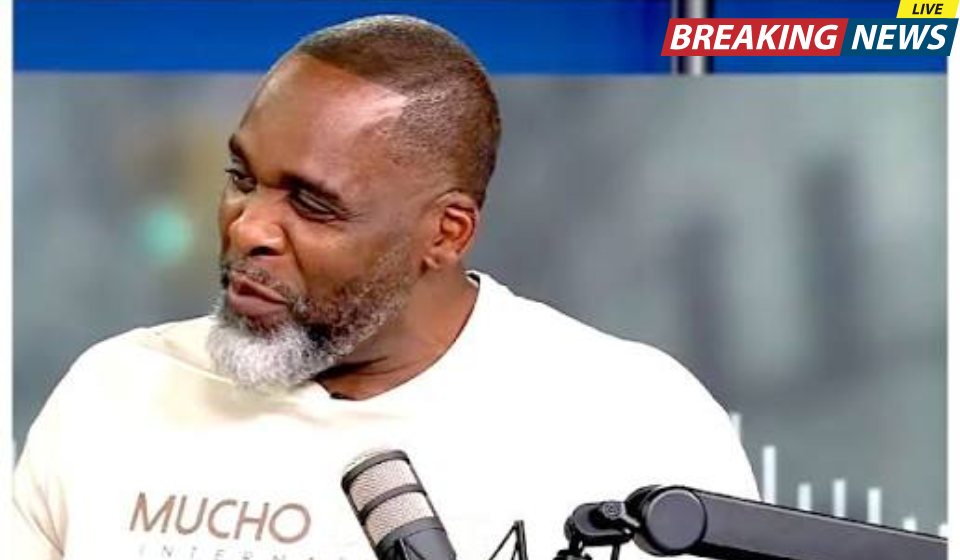
Former Detroit Mayor Kwame Kilpatrick opened up about his past mistakes, his federal corruption conviction, and his life after prison during a recent interview, saying that his biggest personal failures involved character and integrity.
Kilpatrick appeared on the new Fox 2 program “Detroit Talk City” with host Charlie Langton, where he discussed his time as mayor, his legal troubles, and whether he has any regrets about his actions while in office.
During the interview, Kilpatrick acknowledged that he had personal flaws despite being confident and ambitious.
“I never had a problem with confidence,” Kilpatrick said. “I never have had a problem with boldness. I didn’t have a problem walking in the room, but as a man I had a problem with character and integrity.”
The former mayor, who served Detroit from 2002 until his resignation in 2008, was convicted in 2013 on numerous federal public corruption charges. His conviction included 24 counts, including racketeering conspiracy, extortion, bribery, mail fraud, wire fraud, and tax evasion.
He was originally sentenced to 28 years in federal prison.
During the interview, Langton asked Kilpatrick whether he had regrets about the impact his actions had on Detroit.
Kilpatrick said he has regrets, but said they were focused more on his personal decisions and mistakes rather than the city’s development during his administration.
“I have regrets, but it’s not about what I did to the city,” Kilpatrick said. “I have regrets about the decisions that I made in office, decisions of sin, cheating on my wife, lying about it, the decisions of some of the people that I hired.”
However, he defended some of the projects completed during his time as mayor, pointing to developments and events he believes helped the city.
“But I don’t have any regrets over what was done at Campus Martius or the seven hotels or the casino hotels or the Super Bowl or the NCAA Final Four or the riverfront or neighborhoods,” he said.
Kilpatrick, now 56, has become a minister and motivational speaker since his release from prison in 2021. He told Langton that the most difficult moment of his sentence came when he first entered prison.
Kilpatrick recalled the emotional impact of being separated from his family after being sentenced.
“When they slammed that door in Milan that first night, it was the most depressing feeling I’d ever had,” he said. “It was the most gut-wrenching feeling. Not because I was in prison, but because I was away from the duty that I had as a father and husband.”
Kilpatrick has continued to maintain that he did not steal money from the city of Detroit.
“I was the only kid on Lynnwood and the Boulevard that really thought I would never go to jail,” he said. “I did my homework, I cut people’s grass and raked their leaves. I went to school.”
He said the experience changed the way he views personal responsibility, emphasizing the importance of character and integrity.
“It’s not about the crime as much as it is about your character and integrity,” Kilpatrick said. “You could put yourself in a bad situation, a horrible situation, a criminal situation, if you don’t work on those things.”
In January 2021, then-President Donald Trump commuted Kilpatrick’s 28-year prison sentence, allowing him to be released after serving time behind bars.
During the interview, Kilpatrick was also asked whether he would consider returning to politics.
Michigan law prevents him from running for local or state office because of his felony conviction, although he could potentially seek federal office, including a seat in Congress or the U.S. Senate.
Kilpatrick said he currently has no interest in running for public office.
“I mean unless God said run,” he said. “He gotta show up in the bedroom, he gotta look at me.”
When asked whether he believed he could win another election, Kilpatrick responded confidently.
“I don’t lose races,” he said.
Kilpatrick’s comments come years after his corruption conviction ended his political career and forced him to serve time in federal prison. Since his release, he has focused on faith, speaking engagements, and sharing lessons from his experiences.