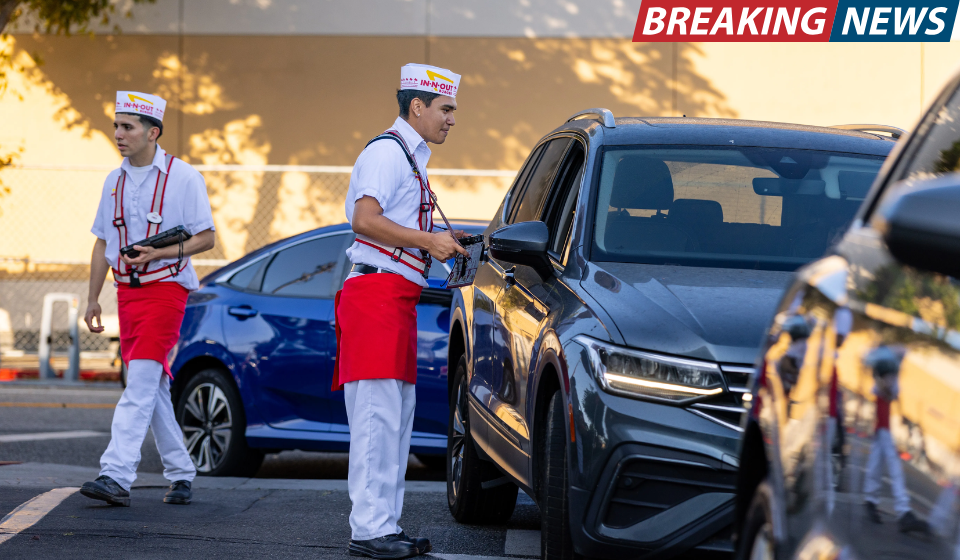
A proposed In-N-Out Burger restaurant in Culver City has become the center of a growing debate over drive-thru restaurants, with residents and officials raising concerns about traffic congestion, vehicle emissions and neighborhood impacts.
The controversy began after In-N-Out announced plans to build a new location at the northeast corner of Sepulveda Boulevard and Sawtelle Boulevard, inside the existing Studio Village Shopping Center. The project has drawn opposition because the proposed drive-thru would be located near an elementary school and an already busy intersection.
According to the proposal, the restaurant would sit on approximately 1.119 acres and include a 3,890-square-foot building. The location would have indoor seating for 84 customers and outdoor seating for 44 people. Plans also include a 61-space parking lot and a drive-thru lane designed to hold up to 26 vehicles.
The restaurant would operate from 10:30 a.m. to 1 a.m. Sunday through Thursday and from 10:30 a.m. to 1:30 a.m. on Fridays and Saturdays. In-N-Out officials said the location would feature a carefully maintained and landscaped property.
If approved, it would become the first new drive-thru restaurant built in Culver City since 1997.
Culver City Extends Drive-Thru Moratorium
The proposed restaurant was discussed during a public meeting earlier this month, where many residents attended to express concerns about adding another drive-thru facility in the area.
Culver City leaders appeared to support those concerns. City officials recently voted to extend a temporary 45-day moratorium on new drive-thru developments for another 10 and a half months.
The extension could give the city time to create new regulations that may permanently ban future drive-thru restaurants.
The city’s moratorium highlighted several concerns raised by residents, including increased traffic, vehicle lines, idling cars, air pollution, odors, trash, pests, pedestrian safety, late-night activity and possible effects on nearby schools and parks.
The debate in Culver City reflects a larger discussion taking place across California, where some communities have moved to restrict or eliminate drive-thru businesses because of environmental and quality-of-life concerns.
California Cities Have Restricted Drive-Thrus for Decades
Restrictions on drive-thru restaurants are not new in California. Some cities began limiting these developments as far back as the 1980s and 1990s.
Communities including Santa Barbara, San Luis Obispo and Sierra Madre have adopted broad bans on drive-thru businesses. Other cities, such as Burbank, Pasadena, Newport Beach and Long Beach, have introduced stricter rules controlling where drive-thrus can operate.
Supporters of restrictions argue that drive-thrus encourage long vehicle lines and increase pollution because cars often remain running while waiting for service.
However, experts say more research is needed to fully understand the long-term effects of drive-thrus on local communities.
Experts Point to Vehicle Emissions Concerns
Marcel Moran, an assistant professor at San José State University’s School of Planning, Policy and Environmental Studies, said drive-thrus have become a major part of the American landscape but remain relatively understudied compared with their widespread use.
A study co-authored by Moran estimated that there are at least 133,000 drive-thru locations across the United States, with about 83% located in urban and suburban areas.
Researchers have examined how idling vehicles affect air quality, especially in areas where cars regularly line up for extended periods.
David Mendoza, an assistant professor at the University of Utah in Salt Lake City, studied vehicle emissions connected to COVID-19 drive-thru testing sites. He said idling vehicles continue to release pollutants, including nitrogen oxides and volatile organic compounds, even as modern cars become more fuel efficient.
Mendoza explained that repeated movement through drive-thru lines can create concentrated pollution areas around these businesses.
“When vehicles move forward one space at a time, they continue producing emissions,” researchers said, raising concerns about the impact on nearby neighborhoods.
Health Concerns During Poor Air Quality Events
The discussion over drive-thrus has also connected with broader concerns about air quality throughout the country.
Earlier this year, Texas environmental officials issued “Ozone Action Days” in major metropolitan areas, including Houston-Galveston, Dallas-Fort Worth, San Antonio, Austin and El Paso.
During those periods, residents were encouraged to reduce driving and avoid unnecessary vehicle idling because pollution levels were already elevated.
Officials warned that increased emissions could create health risks, especially for children, older adults and people with respiratory conditions such as asthma.
Restaurants Defend Drive-Thru Convenience
While environmental advocates and some residents argue that drive-thrus create pollution and traffic problems, restaurant industry leaders say they provide important access for many customers.
Jot Condie, president of the California Restaurant Association, said cities should consider residents who rely on drive-thru services, including families with young children, older adults and people with disabilities or health conditions.
Condie argued that drive-thru restaurants allow more people to safely access food and services without facing barriers that may exist inside traditional restaurants.
A Larger Debate Over the Future of Drive-Thru Dining
The fight over the proposed In-N-Out location in Culver City has grown into a broader conversation about how California communities balance convenience, business growth and environmental concerns.
Supporters of the restaurant say drive-thrus are a practical service that meets customer needs and supports local businesses. Opponents argue that communities must address traffic, pollution and neighborhood impacts before approving new developments.
As Culver City considers possible long-term rules for drive-thru businesses, the outcome could influence how other California cities approach similar projects in the future.