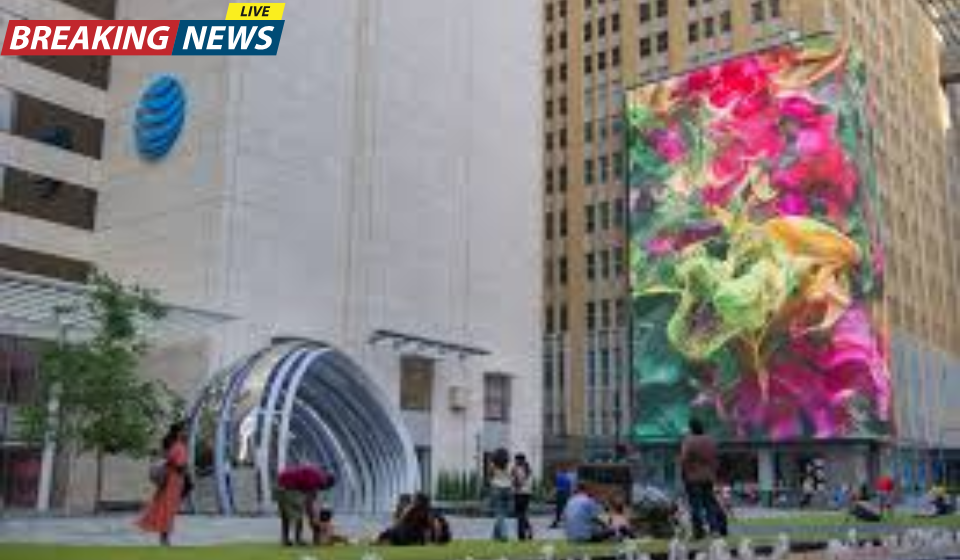
Downtown Dallas appeared bustling on a recent Tuesday morning, with busy streets, office workers carrying coffee into high-rise buildings and colorful FIFA World Cup artwork adding energy to the city center. Yet beneath the activity, city leaders are confronting a growing challenge as residents, major corporations and professional sports franchises increasingly move to surrounding suburbs.
The departures have sparked concerns about Dallas’ long-term role as the economic engine of the Dallas-Fort Worth metroplex, one of the nation’s fastest-growing metropolitan areas.
Major Companies Moving Out of Downtown
One of the biggest recent announcements came from telecommunications giant AT&T, which confirmed it will relocate its headquarters from downtown Dallas to a massive new campus in nearby Plano.
The company plans to move into a 2.3-million-square-foot campus featuring a 280-foot tower inspired by Dallas’ iconic Reunion Tower. Plano officials approved a $20 million incentive package to help attract the company.
The relocation represents another high-profile loss for downtown Dallas, where AT&T has long been one of the area’s largest corporate tenants.
Dallas Stars Also Heading to Plano
The city’s professional hockey team, the Dallas Stars, also announced plans to relocate to Plano.
Rather than simply building a new arena, the organization intends to redevelop the site of a struggling suburban shopping mall into a large mixed-use district that will include:
- A new hockey arena
- Apartments
- Restaurants
- Retail stores
- Entertainment spaces
Stars CEO Brad Alberts said the decision reflects where much of the team’s fan base now lives.
According to Alberts, many season-ticket holders already reside in northern suburbs, and rapid population growth in cities such as Celina, Prosper and Anna is expected to expand that customer base even further.
“Our fans live up this direction, and we’re betting that it’s only going to increase over time,” Alberts said.
Mavericks Also Leaving Downtown Core
While the Dallas Mavericks plan to remain within Dallas city limits, the NBA franchise is also preparing to leave the downtown area.
The team’s future arena plans place it closer to Dallas’ northern edge, reflecting the continuing shift of commercial and entertainment development toward suburban communities.
Dallas Population Declines While Region Continues Growing
The business departures coincide with slowing population growth inside Dallas itself.
According to recent census figures:
- Dallas’ population declined by approximately 1,800 residents last year.
- The city’s total population now stands at about 1.3 million.
- It marked Dallas’ first annual population decline since the COVID-19 pandemic.
Meanwhile, the larger Dallas-Fort Worth metropolitan area, now home to roughly 8.5 million people, continues expanding rapidly.
Between 2020 and 2025:
- Dallas grew by only about 2%.
- The overall DFW region grew by approximately 10%.
Six nearby cities added more residents than Dallas during that period:
- Fort Worth
- Celina
- McKinney
- Frisco
- Denton
- Princeton
Among Texas’ five largest cities, Dallas recorded the smallest population increase since 2020.
County Judge Warns City Must Address Growth Challenges
Dallas County Judge Clay Jenkins said the city’s slowing growth should serve as a warning.
He compared Dallas to “a bug floating in a sink of water,” explaining that while surrounding communities continue rising, Dallas has begun moving in the opposite direction.
Jenkins said city leaders must confront the underlying issues before the situation worsens.
Housing Shortage Seen as Major Factor
Urban planners and housing advocates say one of Dallas’ biggest challenges is its limited housing supply.
Experts argue that the city has not built enough homes to keep pace with regional demand.
State Demographer Lloyd Potter warned that continued population losses could create a negative cycle.
If fewer people live in Dallas, more homes could sit vacant, causing property values to decline. Lower property values would reduce tax revenue, making it more difficult for the city to maintain roads, utilities and other infrastructure.
Housing Advocates Push for Development Reforms
Housing organizations are urging city officials to approve zoning reforms that would allow developers to build:
- Duplexes
- Townhomes
- Smaller apartment buildings
- Higher-density neighborhoods
Supporters believe these changes would:
- Increase housing availability
- Improve affordability
- Help Dallas retain more residents
- Capture a larger share of the region’s rapid growth
Building permit data also highlights the disparity between Dallas County and neighboring suburban counties.
Over the past five years:
- Collin County
- Tarrant County
- Denton County
have consistently approved more residential construction per capita than Dallas County.
Last year alone:
- Dallas County permitted approximately 4.7 homes per 1,000 residents.
- Collin County approved approximately 14.7 homes per 1,000 residents.
Officials say suburban communities have benefited from larger amounts of undeveloped land, allowing them to quickly build thousands of new single-family homes and apartment complexes.
Debate Over Downtown Redevelopment
Dallas’ recent setbacks have intensified debate over the future of downtown.
One controversial proposal would demolish the city’s distinctive City Hall building to make way for large-scale redevelopment projects designed to attract residents, businesses and investment.
The proposal has divided local leaders, with supporters arguing that bold action is necessary while critics question removing one of Dallas’ most recognizable civic landmarks.
Signs of Optimism Remain
Despite recent losses, city officials believe Dallas still has significant strengths.
One bright spot is the city’s expanding financial sector, often referred to as “Y’all Street,” where financial firms continue relocating operations and creating jobs.
Other neighborhoods continue attracting residents and visitors, including:
- Bishop Arts District
- Lower Greenville
- Parts of the downtown urban core
Developers are also converting older office buildings into residential apartments and condominiums, bringing more people back into downtown neighborhoods.
Leaders Say Dallas Has Reinvented Itself Before
Dallas City Council member Paula Blackmon expressed confidence that the city can adapt once again.
She said Dallas has a long history of overcoming economic challenges through development and innovation rather than decline.
Similarly, Brad Cheves, president of the Dallas Regional Chamber, described the current period as another opportunity for reinvention rather than a crisis.
Cheves noted that Dallas has repeatedly transformed itself over the decades and believes the city can become even more competitive if leaders embrace change and address issues such as housing, affordability and economic development.
While suburban communities continue attracting businesses and residents, city leaders say Dallas still possesses the resources, infrastructure and economic foundation needed to remain one of Texas’ most important cities—provided it successfully adapts to the region’s rapidly changing growth patterns.